




- Published on: 2026-08-27 22:56:00
Why Trading Journals Can Improve Your Decision-Making
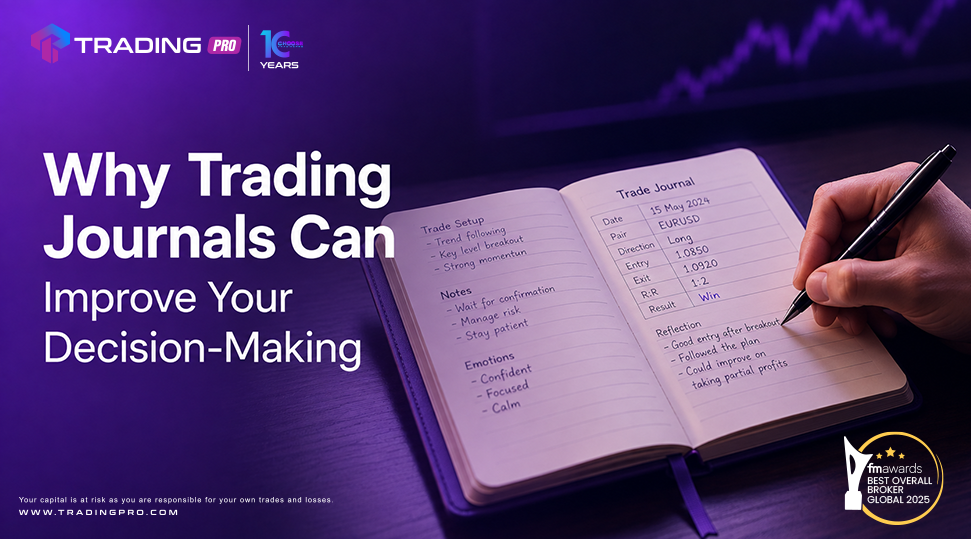
Trading involves making decisions under uncertain market conditions. Even when traders have a strategy, it can be difficult to understand which parts of their approach are working and which need improvement without reviewing their past decisions.
This is where a trading journal can become a useful part of the trading process.
A trading journal is more than a record of winning and losing trades. When used consistently, it can help traders understand their decision-making process, identify recurring mistakes, and develop greater discipline.
For MENA traders following local and global financial markets, maintaining a structured journal can also make it easier to understand how different market conditions affect their trading behavior.
What Is a Trading Journal?
A trading journal is a record of the trades a trader takes and the reasoning behind them.
The information recorded can include:
-
The financial instrument traded
-
Entry and exit prices
-
Position size
-
Date and time
-
Reason for entering the trade
-
Expected market direction
-
Risk level
-
Final outcome
-
Emotional state before and after the trade
The exact format is less important than consistency.
The objective is to create a reliable record that can be reviewed later.
Why Recording More Than the Result Matters
A common mistake is to judge a trade only by whether it made or lost money.
However, a profitable trade can still be poorly executed, while a losing trade can follow a well-defined strategy.
Separate the Decision From the Outcome
Imagine a trader follows their strategy, manages risk properly, and enters a position based on their predefined conditions. The trade eventually loses because the market moves unexpectedly.
That does not automatically mean the decision was wrong.
Reviewing the process rather than focusing only on the outcome can help traders evaluate whether they followed their own rules.
How a Trading Journal Can Reveal Patterns
Identify Repeated Mistakes
After recording enough trades, patterns may become easier to notice.
A trader might discover that they frequently:
-
Enter trades too early
-
Move stop-loss levels
-
Trade more after a loss
-
Close profitable positions too quickly
-
Ignore their trading plan
-
Trade during periods of high volatility without preparation
Recognizing these behaviors is the first step toward changing them.
Understand Stronger Setups
A journal can also reveal which types of trading setups have performed better historically.
For example, a trader may find that certain market conditions consistently produce better results for their strategy.
This information can help them focus on the setups that fit their approach instead of taking every available opportunity.
Journaling and Trading Psychology
Trading decisions are not purely technical.
Fear, impatience, overconfidence, and frustration can influence how traders respond to market movements.
Recording emotions alongside trades can help traders understand when psychological factors affect their decisions.
Ask the Right Questions
After each trade, traders can ask:
-
Did I follow my trading plan?
-
Why did I enter the trade?
-
Did I feel pressured to enter?
-
Did I change my plan after entering?
-
Was the amount of risk appropriate?
-
What would I do differently next time?
These questions can turn individual trades into learning opportunities.
How MENA Traders Can Use a Trading Journal
MENA traders may follow markets influenced by both regional and international developments.
Oil prices, central bank decisions, inflation, geopolitical events, and global economic data can all contribute to changing market conditions.
Adding a short note about the market environment to each journal entry can help traders understand how their strategies perform under different conditions.
For example, a trader could record whether a trade was taken before or after an important economic announcement and compare the results over time.
Keeping the Process Simple
A trading journal does not need to be complicated.
A basic spreadsheet can be enough to track trades and review performance.
The most important factor is consistency.
Review the Journal Regularly
Recording trades without reviewing them limits the value of the process.
Traders can set aside time each week or month to look for recurring patterns.
Instead of asking only, “How much did I make?”, they can ask:
“What did my trades teach me?”
That shift can make the journal a practical learning tool rather than simply a transaction record.
How TradingPRO Fits Into the Learning Process
TradingPRO provides educational resources and trading tools that traders can use alongside their own research and learning process.
For MENA traders, combining these resources with a personal trading journal can help create a more structured approach to reviewing market decisions and developing trading habits over time.
A journal does not predict the market, but it can help traders understand themselves and their strategies better.
Conclusion
A trading journal is a simple tool that can have a meaningful role in a trader’s development.
By recording not only trade results but also the reasoning, market conditions, and emotions behind each decision, traders can identify patterns that may otherwise remain unnoticed.
For MENA traders, maintaining this habit can support continuous learning and greater discipline while navigating both regional and global markets.
The goal is not to create a perfect record. It is to create a useful one that helps turn past trading decisions into better-informed future decisions.
Start Your Trading Journey with TradingPRO
Ready to take the next step in your trading journey? Visit TradingPRO to register your account and connect with TradingPRO across our social media channels.


