




- Published on: 2022-08-15 15:02:00
What Are Stablecoins? A Beginner's Guide to USDT, USDC, DAI, and How They Work
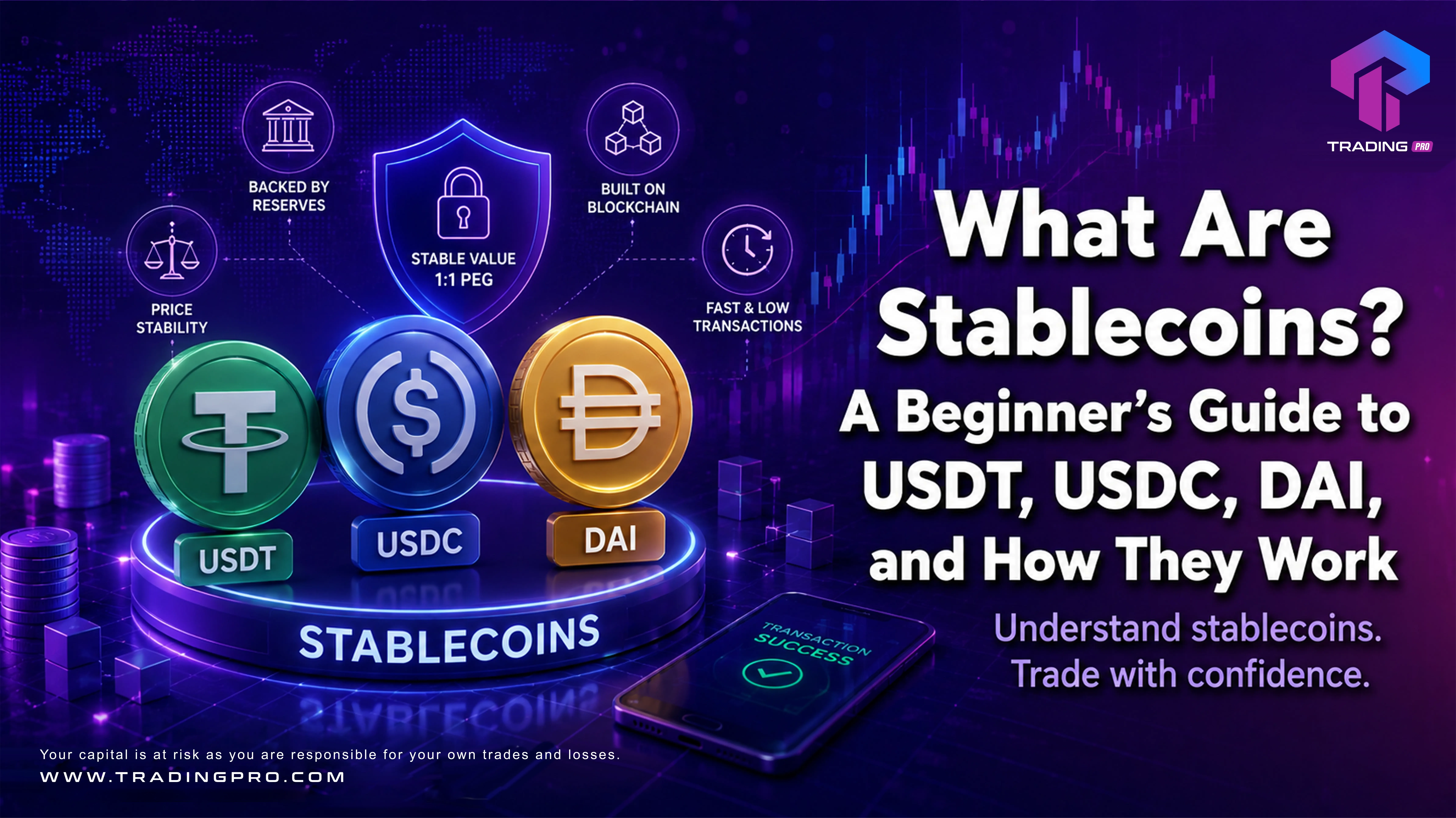
If you have spent any time in the cryptocurrency space, you have almost certainly encountered stablecoins — tokens like USDT (Tether), USDC (USD Coin), and DAI that maintain a stable value pegged to the US Dollar rather than fluctuating wildly like Bitcoin or Ethereum. Stablecoins have become foundational infrastructure in the crypto ecosystem, serving as the primary medium of exchange, the dominant unit of account in DeFi, and a critical tool for traders managing risk in volatile markets.
Yet despite their ubiquity, stablecoins are often misunderstood. How exactly does a cryptocurrency maintain a stable value? Are they all the same? What are the risks? And why does any of this matter to a trader? This guide gives you a complete, plain-language breakdown of everything you need to know about stablecoins and their role in modern crypto markets.
What Is a Stablecoin?
A stablecoin is a cryptocurrency designed to maintain a stable value relative to a reference asset — almost always the US Dollar, though stablecoins pegged to the Euro, gold, and other assets also exist. While Bitcoin's price might swing 10% in a single day, a well-functioning USD stablecoin is designed to always trade at or very close to $1.00.
This stability makes stablecoins uniquely useful in contexts where the volatility of other cryptocurrencies would be a problem: holding value between trades, making payments, earning yield in DeFi protocols, and transferring value globally without the exchange rate risk of holding a volatile digital asset. Stablecoins essentially bring the programmability and permissionlessness of blockchain technology to a stable unit of account.
The Main Types of Stablecoins
Fiat-Collateralised Stablecoins (USDT, USDC)
The simplest and most widely used type of stablecoin is backed by fiat currency held in reserve. For every USDT or USDC in circulation, the issuing entity holds an equivalent amount of US Dollars (or highly liquid dollar-equivalent assets like short-term Treasury bills) in reserve. This backing is what allows the stablecoin to maintain its $1.00 peg.
Tether (USDT) is the largest stablecoin by market capitalisation and daily trading volume, with billions of dollars worth of USDT used in crypto trading every day. USD Coin (USDC), issued by Circle in partnership with Coinbase, is the second largest and is widely regarded as more transparent than Tether, with regular attestations of its reserve holdings by regulated accounting firms.
The primary risk of fiat-collateralised stablecoins is counterparty risk — you are trusting the issuing company to actually hold the reserves they claim to hold and to honour redemptions. This is fundamentally different from decentralised cryptocurrencies like Bitcoin, where there is no central issuer to trust or mistrust.
Crypto-Collateralised Stablecoins (DAI)
Rather than being backed by fiat currency in a bank account, crypto-collateralised stablecoins are backed by other cryptocurrencies locked in smart contracts. DAI, created by the MakerDAO protocol, is the most prominent example. Users lock up ETH and other approved collateral in a smart contract and receive DAI in return — always at an over-collateralised ratio (e.g. depositing $150 of ETH to receive $100 of DAI) to account for the price volatility of the collateral.
If the value of the collateral falls below the required threshold, the smart contract automatically liquidates it to repay the DAI debt. This mechanism maintains the peg without a centralised issuer holding fiat reserves. DAI is therefore more decentralised and censorship-resistant than USDT or USDC, at the cost of greater complexity and the risk that extreme market volatility could stress the collateralisation system.
Algorithmic Stablecoins: A Cautionary Tale
Algorithmic stablecoins attempt to maintain their peg not through collateral reserves but through algorithmic supply adjustments — automatically expanding or contracting the token supply in response to demand to keep the price at $1.00. The most high-profile example, TerraUSD (UST), collapsed spectacularly in May 2022, losing its peg entirely and falling to near zero along with its sister token LUNA, destroying tens of billions of dollars in value within days.
The Terra/LUNA collapse highlighted the fundamental vulnerability of algorithmic stablecoins: their peg mechanism can enter a 'death spiral' under conditions of severe selling pressure, where the algorithm's attempt to restore the peg generates further selling rather than stabilising the price. The crypto community has largely concluded that uncollateralised algorithmic stablecoins represent an inherently fragile design that cannot reliably maintain a peg through extreme market stress.
Why Stablecoins Matter for Crypto Traders
Capital Preservation During Volatility
For crypto traders, stablecoins provide a way to move out of volatile crypto assets into a stable position without leaving the crypto ecosystem or converting back to fiat (which may be slower, subject to withdrawal limits, or trigger tax events in some jurisdictions). When you are uncertain about near-term market direction or want to preserve capital during a sell-off, moving into USDC or USDT keeps your capital ready to redeploy quickly when the opportunity arises.
DeFi Yield Generation
As discussed in our DeFi guide, stablecoins are the primary medium for earning yield in decentralised finance. Lending USDC on Aave, providing USDT/USDC liquidity on Curve Finance, or depositing stablecoins in yield aggregator protocols are all ways to generate returns on idle capital without taking on cryptocurrency price risk.
Trading Pair Denomination
The majority of cryptocurrency trading pairs on both centralised and decentralised exchanges are denominated in stablecoins — BTC/USDT, ETH/USDC, SOL/USDT. This means stablecoins effectively function as the US Dollar of the crypto world, the common reference currency against which all other crypto assets are priced and traded.
Key Risks Every Trader Should Understand
-
De-pegging risk — even the most established stablecoins have experienced temporary de-pegging events during periods of extreme market stress. USDT briefly traded as low as $0.95 during the 2018 bear market. Understanding that stablecoins are not perfectly risk-free, even when functioning as intended, is important.
-
Counterparty and reserve risk — fiat-backed stablecoins depend entirely on the trustworthiness of their issuer. A stablecoin issuer that cannot honour redemptions or is found to hold insufficient reserves could cause its stablecoin to lose its peg permanently.
-
Regulatory risk — stablecoins are increasingly attracting regulatory scrutiny globally. New regulations requiring stricter reserve standards, licensing requirements for issuers, or restrictions on stablecoin use could affect the operational landscape for major stablecoins.
-
Smart contract risk — for crypto-collateralised and algorithmic stablecoins, bugs or exploits in the underlying smart contracts could cause loss of funds or peg failure, as the Terra/LUNA collapse demonstrated in the extreme.
Stablecoins and TradingPRO
While TradingPRO's CFD trading platform does not require you to hold or manage stablecoins directly, understanding the stablecoin ecosystem is valuable context for any crypto trader. The health and stability of major stablecoins affects liquidity and sentiment across crypto markets. USDT or USDC-related concerns can cause broad crypto market sell-offs as traders worry about contagion, and understanding why gives you an informational edge in interpreting crypto market moves.
-
Access crypto CFDs without wallet management — TradingPRO lets you trade crypto price movements without the complexity of managing wallets, private keys, or stablecoin balances
-
Trade the broader crypto market narrative — understanding stablecoin dynamics helps you contextualise news events and market moves that affect the assets you trade on TradingPRO
-
Risk management built in — TradingPRO's guaranteed stops and negative balance protection provide the kind of downside protection that stablecoin mechanics attempt to offer — but with the added benefit of regulated broker oversight
Conclusion: Stable Is Not Risk-Free
Stablecoins are one of the most important innovations in the cryptocurrency space — enabling the programmability of blockchain technology to be combined with a stable unit of account in a way that has unlocked the entire DeFi ecosystem and dramatically improved the utility of crypto for everyday trading and value transfer.
But as the Terra/LUNA collapse reminded the entire industry in 2022, stable does not mean risk-free. Different stablecoin designs carry different risk profiles, and understanding those differences is important for anyone operating in the crypto space. Approach stablecoins with the same informed scrutiny you would apply to any other financial instrument. TradingPRO gives you a safer, simpler way to access crypto market exposure — open your account today.
Access Crypto Markets Simply and Safely with TradingPRO


