



- Published on: 2026-08-23 10:22:21
How to Spot a Trading Scam in 2026: The Ultimate Protection Checklist

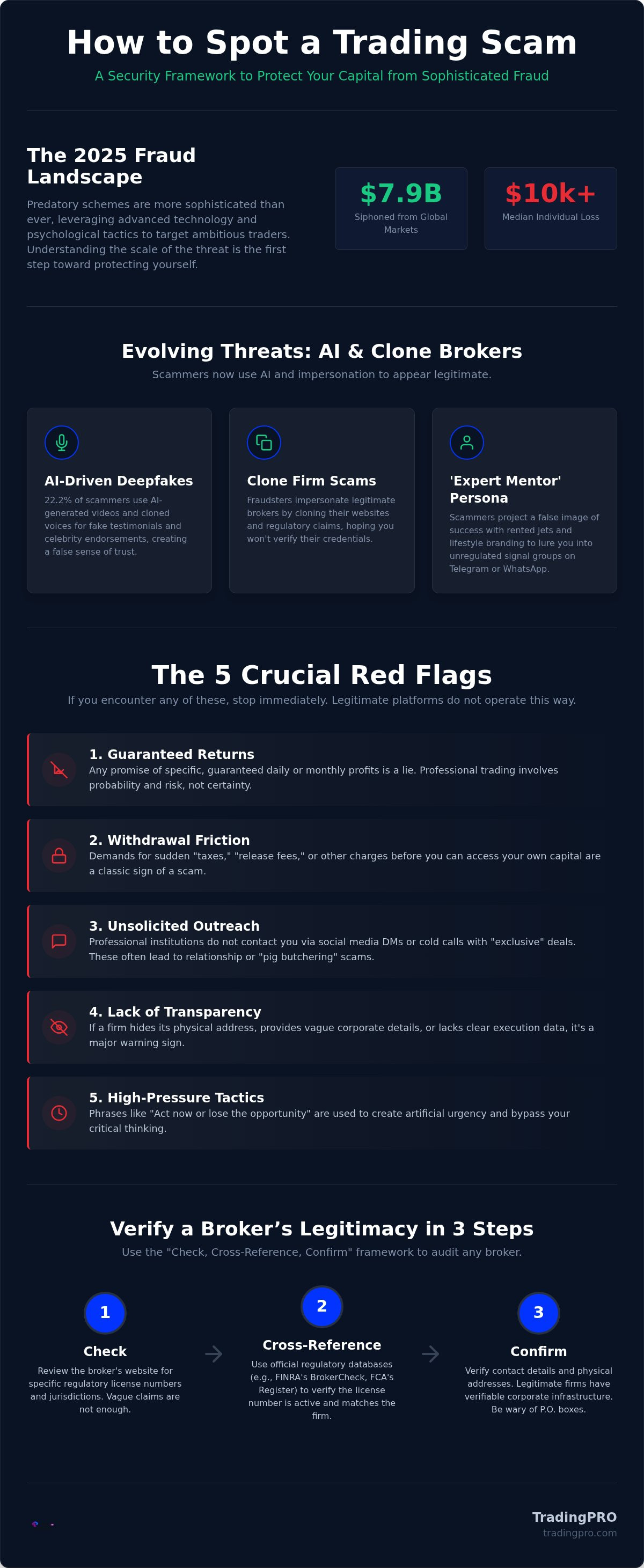
In 2025, predatory schemes siphoned a staggering $7.9 billion from the global markets, proving that even ambitious players are vulnerable in this high-stakes environment. With the median individual loss now exceeding $10,000, the cost of a single mistake is higher than ever. You've likely felt the pressure of distinguishing between high-performance marketing and calculated traps. It's frustrating to face a wall of complex regulatory jargon when you simply want to secure your financial future on a reliable platform.
We're here to arm you with institutional-grade clarity. You'll master exactly how to spot a trading scam using our expert-led security framework, designed to protect your capital from sophisticated fraud. This guide delivers a definitive checklist to audit any broker's legitimacy and provides the precise steps to report misconduct if you encounter it. Prepare to trade with the confidence of a professional who knows exactly how to identify a safe haven and build momentum in a fast-moving landscape.
Key Takeaways
- Decode the 2026 fraud landscape where AI-driven deepfakes and sophisticated clone brokers target ambitious traders.
- Master exactly how to spot a trading scam by identifying the five critical red flags, including guaranteed returns and withdrawal friction.
- Deploy the "Check, Cross-Reference, Confirm" framework to audit global broker legitimacy through elite regulatory databases.
- Protect your capital from manipulated social trading statistics by learning to verify a master account's authentic performance.
- Leverage institutional-grade infrastructure and tiered accounts to ensure your trading journey starts on a secure, professional foundation.
Understanding the 2026 Trading Scam Landscape
Trading fraud isn't what it used to be. The transition from high-pressure boiler rooms to AI-powered deepfakes is complete. Regulators report that 22.2% of bad actors now use AI to generate deepfake videos and cloned voices to lure victims. This isn't just about "getting rich quick." It's a sophisticated psychological game. Learning how to spot a trading scam starts with recognizing that if you can't audit the infrastructure, you're the target. Scammers leverage global scale and elite-status branding to make their fraudulent platforms feel like a safe haven.
You must distinguish between market risk and platform fraud. Market risk is a legal, inherent part of trading where prices move against your position. Platform fraud is illegal. It involves "phantom trading bots" and fake dashboards that show profits while your actual capital is being siphoned. Scammers often target emerging markets using clone brokers because they rely on the confusion over international regulations. A solid foundation in Securities Fraud basics helps you see through these high-octane emotional hooks and assertive marketing tactics.
The Rise of the 'Expert Mentor' Persona
Modern fraudsters project the image of an elite, high-performance mentor. They use rented jets and fake lifestyle branding to sell a version of success that doesn't exist. Be wary of AI-generated testimonials where deepfake celebrity endorsements promise "guaranteed" returns. These scams often move to unregulated signal groups on Telegram or WhatsApp. They'll tell you they've found a secret shortcut, but they're just leading you into a trap where you have no control over your funds.
Common Types of Modern Trading Fraud
Clone firm scams are a dominant threat. Fraudsters impersonate a reliable multi asset broker by cloning their website design and regulatory claims. They hope you won't verify their credentials through official databases like FINRA's BrokerCheck. Recovery fraud is another growing trend. It targets individuals who've already lost money, promising to "get your capital back" for a small administrative fee. Finally, avoid the 'Other People’s Money' (OPM) trap. If a "trader" asks for your login details to trade on your behalf, they're likely looking to drain your account through commissions or direct theft.
The 5 Crucial Red Flags of a Trading Scam
Mastering how to spot a trading scam requires a sharp eye for inconsistencies. Fraudsters thrive on your desire for speed and success. They use polished facades to mask their predatory nature. Don't let high-performance marketing blind you to these five non-negotiable red flags. If you encounter any of these, stop immediately and re-evaluate the platform's legitimacy.
- Guaranteed Returns: Markets are dynamic. Any entity promising specific daily or monthly profits is lying. Legitimate trading is about probability, not certainty.
- Withdrawal Friction: This is a major warning sign. If a platform demands sudden "taxes" or "release fees" before you can access your own capital, it's a scam.
- Unsolicited Outreach: Professional institutions don't lurk in your DMs or cold-call you with "exclusive" deals. Be cautious of "pig butchering" and relationship investment scams that start with a seemingly innocent social media message.
- Lack of Transparency: Elite firms provide verifiable physical addresses and clear execution data. If the "About Us" page is vague or execution stats are hidden, walk away.
- High-Pressure Tactics: Scammers use artificial urgency to bypass your critical thinking. "Act now or lose the opportunity" is a classic hallmark of a fraudulent scheme.
The Myth of 'Zero Risk' Trading
Fraudsters love the "risk-free" narrative. They use it to lower your psychological guard and build a false sense of security. While Negative Balance Protection is a vital institutional safety feature that prevents you from losing more than your account balance, it isn't a profit guarantee. Market volatility is an inherent, unavoidable reality of professional trading. Real trading requires strategy, precision, and an acceptance of risk, not empty promises of safety without effort.
Spotting Shady Payment Methods
Follow the money. Elite brokers prioritize bank wires and recognized e-wallets because they leave a clear audit trail. If a platform asks for deposits via personal crypto wallets or untraceable gift cards, you're looking at a trap. Secure infrastructure includes transparent deposit bonus terms that are clearly documented in legal agreements. Don't settle for anything less than institutional-grade security. Ready to start your journey on a secure, multi-asset platform? You can register your account today and trade with confidence.
How to Verify a Broker's Legitimacy in 3 Steps
Proactive verification is your strongest shield. Relying on intuition is a high-risk strategy in a landscape where bad actors use AI to mirror legitimate platforms. You need a rigorous, institutional-grade process to separate elite infrastructure from predatory traps. Follow our "Check, Cross-Reference, Confirm" framework to ensure your capital remains secure. This is the definitive method for how to spot a trading scam before you commit a single dollar of capital.
Step 1: The Regulatory Audit
Every legitimate broker must display a valid license number. Don't take this number at face value. Scammers frequently operate as "Clone Firms," stealing the registration details of established entities to build unearned trust. Visit the official databases of regulators like the FCA, FSCA in South Africa, or the FSC in Mauritius. Search for the broker by name and license number to confirm they're authorized to provide financial services. Consulting the SEC's list of Red Flags of Investment Fraud provides an additional layer of security during this audit. Multi-regional regulation is a hallmark of a global leader and acts as a safe-haven for retail traders.
Step 2: Testing the Infrastructure
Execution speed isn't just a performance metric; it's a security feature. High-performance brokers invest heavily in low-latency servers and ECN execution to ensure transparency. Open a demo trading account to put the platform through its paces without risking your capital. Use this period to explore the Trade Hub and evaluate the sophistication of the available tools. If you encounter significant slippage, frozen charts, or "errors" during high-volatility news events, the infrastructure is likely compromised or designed to work against you.
Step 3: Analyzing User Sentiment
Digital footprints don't lie. Use Trustpilot and specialized trading forums to gauge the community's experience. You must distinguish between "angry traders" who lost money due to market volatility and "scam evidence" like blocked withdrawals or ghosting. Be wary of a sudden influx of five-star reviews that look bot-generated. Authentic platforms prioritize transparency in their ecosystems. For example, when evaluating social trading vs copy trading options, look for a live, unedited feed of master account performance. If the data feels too perfect or lacks a history of drawdowns, it's a manufactured trap designed to lure the unwary.
Identifying Scams in Social and Copy Trading
Social and copy trading represent the evolution of the modern market. They offer a path to elite-level performance by mirroring seasoned professionals. However, this accessibility has created a massive opportunity for bad actors. Scammers now use these ecosystems to manufacture false success stories. Learning how to spot a trading scam in the social sphere requires looking past the 1,000% gain headlines. You must audit the underlying data to ensure you aren't following a "Ghost Trader," a persona fabricated by AI or stolen photos to lure followers into a high-risk trap.
Spotting Manipulated Profit Curves
The most common red flag is a profit line that looks like a straight diagonal upward. This is often the result of "backtesting" manipulation or "martingale" strategies where losing trades are never closed. If a Master account shows zero visible losing trades over several months, it's a statistical impossibility. Professional traders always experience drawdown as part of their strategy. Real-time verification is the only metric that matters. If the platform doesn't provide a live, unedited feed of every execution, the results are likely manufactured to deceive.
The Transparency Checklist for Copy Trading
A legitimate social ecosystem prioritizes transparency over hype. You need to see the Master trader's actual equity, not just their percentage gains. Fraudsters often trade with tiny amounts on a "Micro" account while claiming to manage millions. This disconnect allows them to take reckless risks that you cannot afford to mirror. Use this checklist to audit any Master account before committing capital:
- Equity Verification: Does the trader have their own skin in the game?
- Trade History: Is every trade, including the losers, visible and timestamped?
- Automated Fees: Are the performance fees handled by the broker infrastructure, or is the trader asking for private payments?
- Churning Detection: Is the trader opening and closing dozens of tiny positions? This "churning" is a tactic to earn rebates from your spread costs, regardless of whether you profit.
Elite infrastructure provides the granular drawdown and risk data you need to make informed decisions. Don't settle for opaque platforms that hide the truth behind flashy marketing. Secure your seat in a transparent ecosystem and start mirroring verified professionals today. You can register your account here to access institutional-grade social trading and protect your capital from sophisticated fraud.
Choosing a Secure Infrastructure for Your Trading Journey
Elite trading isn't just about your strategy. It's about the ground you stand on. Institutional-grade infrastructure serves as your ultimate defense against fraudulent schemes. When you trade on a platform built for speed and transparency, you eliminate the "technical glitches" that scammers use to freeze withdrawals or manipulate price feeds. A professional broker provides a modular account system designed to grow with your ambition while keeping your capital secure. This structural clarity is a key element in how to spot a trading scam, as fraudulent platforms rarely offer tiered, specialized account options backed by real-time execution data.
For those entering the market with caution, a Rookie Account offers a perfect entry point. It allows you to navigate live conditions without the high-capital pressure that scammers often use to trap victims. Once you've verified the execution speed and established trust, you can scale toward high-performance environments like ScalpX. This transition ensures you're always trading on infrastructure optimized for your specific style, from precision entries to rapid-fire exits. You deserve a partner that values your success as much as you do.
The Hallmarks of a Professional Broker
A dominant force in the industry leads with transparency. You should expect clear fee structures with zero hidden commissions. If a broker hides their costs or makes the math difficult, walk away. Professionalism also means having access to responsive, human-led customer support 24/5. You aren't just a number; you're a partner in a high-stakes environment. Elite brokers also prioritize your growth, maintaining an active blog and resource center to sharpen your edge. This commitment to education is a major differentiator when learning how to spot a trading scam, as fraudsters prefer an uninformed audience that doesn't ask difficult questions.
Your Next Steps: Building a Frictionless Future
Start small and trade smart. Use Micro accounts to test live market conditions with minimal risk before committing significant capital. If you prefer a mentor-led approach, embrace the social ecosystem by copying verified experts who have proven their resilience over time. Finally, empower your strategy by choosing the best trading infrastructure for scalping. This ensures your execution is fast, your data is accurate, and your future is built on a foundation of institutional stability. Success in 2026 belongs to those who prioritize security without compromising on performance.
Secure Your Financial Momentum
You've now moved beyond the fear of fraudulent schemes. By mastering the "Check, Cross-Reference, Confirm" framework, you've equipped yourself with the tools of an institutional auditor. You understand that real success is built on transparent execution, not secret shortcuts or AI-generated deepfakes. Mastering how to spot a trading scam is the definitive boundary between a victim and a high-performance trader.
True dominance in the markets requires a partner that prioritizes your security as much as your speed. You need a safe haven that offers global regulatory compliance and negative balance protection as standard features. Don't let your ambition be sidelined by inferior infrastructure or predatory traps. Professional trading is about precision, reliability, and the confidence to act on opportunity without hesitation.
Take control of your journey with a leader that has provided multi-asset infrastructure since 2017. Experience institutional-grade execution speed and a transparent ecosystem designed for your growth. Secure your trading future and join a transparent ecosystem at TradingPRO. Your path to elite market participation starts with a foundation you can trust.
Frequently Asked Questions
Is all forex trading a scam?
No, forex trading is a legitimate global market. It's the infrastructure you use that determines your safety. Scams occur when unregulated entities impersonate elite brokers to siphon capital. Learning how to spot a trading scam involves looking past flashy marketing to audit the platform's regulatory standing and execution speed. Legitimate trading is built on transparent data and institutional stability, not secret shortcuts or guaranteed returns.
What should I do if I’ve already been scammed by a broker?
You must act decisively and report the incident to your local financial regulator and the police. Contact your bank or credit card provider immediately to initiate a chargeback if possible. Be extremely wary of "recovery agents" who contact you promising to retrieve your funds for a fee. This is often a secondary scheme known as recovery fraud. Document every communication, transaction ID, and website link to support your official report.
Can a regulated broker still be a scam?
A truly regulated broker operates under strict institutional oversight, but fraudsters often lie about their status. They may use stolen license numbers or claim "regulation" from non-existent or offshore bodies with no enforcement power. Always verify credentials directly on the regulator's official database, such as the FSCA or Mauritius FSC. If the broker's name and website don't match the regulatory record exactly, it is a sophisticated clone firm.
How do I know if a copy trading master is real?
Authentic copy trading masters provide a transparent, unedited history of their performance, including their losing trades. If a master account shows a perfect upward curve with zero drawdowns, it is a manufactured deception. Real professionals always experience market volatility. Verify that the master trader has significant equity in their own account. If they're trading with pennies while claiming elite status, they're likely using a "Ghost Trader" persona to lure followers.
Why do scammers ask for payment in cryptocurrency?
Fraudsters demand cryptocurrency because these transactions are irreversible and provide anonymity. Unlike bank wires or credit card payments, crypto transfers lack a centralized authority to dispute the transaction or initiate a refund. Legitimate brokers prioritize recognized payment corridors that leave a clear audit trail. If a platform insists on personal crypto wallets or gift cards for deposits, you're facing a major red flag in your journey of how to spot a trading scam.
Is it safe to share my ID for KYC verification with a broker?
Sharing your identification is a standard part of the Know Your Customer (KYC) process for any regulated institution. It's a mandatory legal requirement designed to prevent money laundering and identity theft. In fact, if a broker allows you to deposit and trade without requesting valid ID, you should be highly suspicious. Professional platforms use secure, encrypted portals to handle your sensitive data, ensuring your privacy remains protected while maintaining global compliance standards.
What are the signs of a 'clone' website?
Clone websites often have subtle misspells in the URL or use a different domain extension than the official brand. Check the domain age using specialized lookup tools; if a broker claims a decade of experience but their website was registered last month, it's a trap. Look for broken links, poor grammar, or low-resolution logos. Legitimate firms invest in high-performance, frictionless digital experiences that scammers rarely have the resources or time to replicate perfectly.


