


- Published on: 2026-10-20 10:46:00
Forex Trading in Nigeria: Is It Legal and How to Start
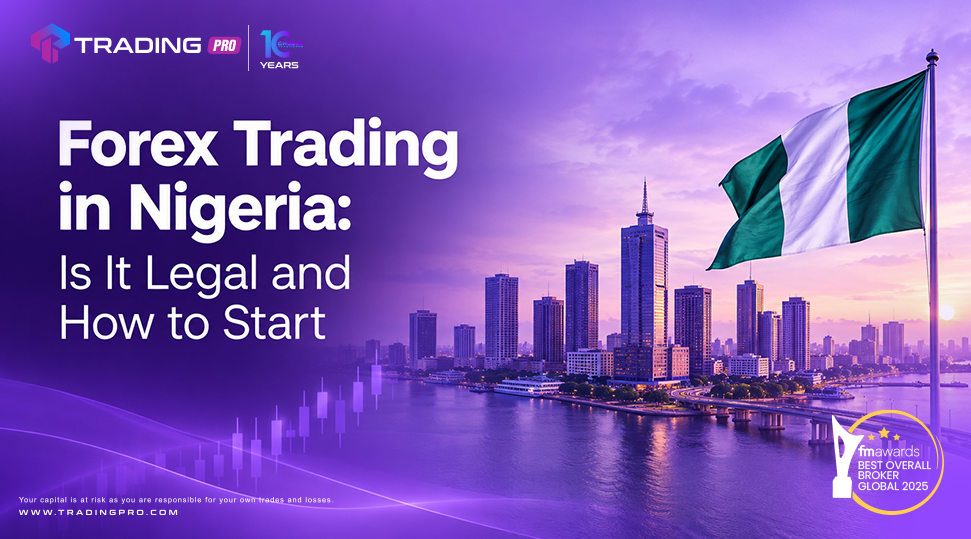
Forex trading has attracted growing interest across Nigeria, driven by a young, internet-connected population, the appeal of global markets and the search for additional income streams. Yet one question comes up again and again before anyone places a first trade: is forex trading legal in Nigeria?
The honest answer is that it depends on what you mean, because the rules distinguish between trading itself, the companies that offer trading services, and how money moves in and out of your account. In this guide, we explain how to think about the legal and regulatory side of forex trading in Nigeria, what risks to understand, how to choose a trustworthy broker, and the practical steps to get started responsibly.
Please note: this article is general educational information, not legal or financial advice. Regulations can change, so always check current guidance from the relevant Nigerian authorities before you trade.
What Is Forex Trading?
Forex, short for foreign exchange, is the global market where currencies are bought and sold. Traders speculate on whether one currency will rise or fall against another, such as the euro against the US dollar or the British pound against the Japanese yen.
The forex market is one of the largest financial markets in the world and operates around the clock on weekdays, which is part of its appeal. Retail traders usually access it through online brokers using products such as contracts for difference (CFDs), which allow them to speculate on price movements without owning the underlying currency.
Is Forex Trading Legal in Nigeria?
This is the question most people search for, and it is worth approaching carefully. The legal position has several layers, and it is more useful to understand them than to rely on a one-line answer.
- The activity versus the provider. Regulators in most countries focus less on the individual trader and more on the businesses that offer trading services to the public. In Nigeria, financial and capital market activity is overseen by authorities such as the Securities and Exchange Commission (SEC) and the Central Bank of Nigeria (CBN), each with its own remit.
- Local registration and licensing. Firms that solicit investment from the public are generally expected to meet local registration requirements. The SEC has issued public warnings in the past about unregistered entities offering investment-style schemes, so it is wise to check the regulator's official notices.
- Foreign exchange rules. Because forex involves currencies, the rules around moving funds, foreign currency transfers and payment methods also matter. Official CBN guidance on foreign exchange transactions can affect how you fund or withdraw from a trading account.
- International brokers. Many Nigerians trade through international brokers that are regulated in other jurisdictions. A broker's regulation abroad is not the same as local registration, so understanding which rules apply to you is part of your own due diligence.
Because these rules develop over time, the most reliable approach is to read current publications from the SEC and CBN directly, and to seek professional legal advice if you are unsure about your own situation.
Understand the Risks Before You Start
Whatever the regulatory position, every trader should understand that forex and CFD trading carries a high level of risk.
- Leverage amplifies losses as well as gains. Leverage lets you control a larger position with a smaller deposit, but losses are calculated on the full position size.
- Prices can move quickly. Economic news, central bank decisions and geopolitical events can cause sharp moves, sometimes with little warning.
- Most beginners lose money at first. Learning to trade takes time, and capital you cannot afford to lose should never be used.
- Currency risk is personal for Nigerian traders. If your income and savings are in naira while your account is in US dollars, movements in the exchange rate can affect your real returns.
Trading should never be treated as guaranteed income, and anyone promising guaranteed profits should be treated with suspicion.
How to Spot Forex Scams
Unfortunately, the popularity of forex has also attracted fraudsters. Watch for these warning signs:
- Guaranteed or fixed returns. Legitimate trading never guarantees profit.
- Pressure to deposit quickly. Urgency is a classic manipulation tactic.
- Unsolicited offers on social media or messaging apps. Be cautious of strangers who contact you with "signals" or investment opportunities.
- Requests to send money to personal accounts or wallets. A genuine broker does not ask you to pay an individual.
- No verifiable regulation or company details. If you cannot confirm who runs the platform and who regulates it, walk away.
- "Managed account" schemes with no transparency. Never hand over control of your funds without understanding exactly who holds them and under what terms.
How to Choose a Forex Broker
A good broker is the foundation of a safe trading experience. When comparing brokers, consider the following.
Regulation. Check which authorities regulate the broker, and verify the licence number on the regulator's own website rather than relying on the broker's claims alone.
For reference, TradingPRO publishes its licensing details, including its FSCA authorisation in South Africa and its FSC licence in Mauritius, on its regulations page.
Client fund protection. Look for information on whether client money is kept separate from company funds and what protections exist.
Transparent costs. Compare spreads, commissions, overnight financing and withdrawal fees. Be clear on what you will pay before you trade.
Platforms and tools. A reliable, widely used trading platform, a demo account and quality educational resources make learning easier.
Funding and withdrawals. Check which deposit and withdrawal methods are supported, how long processing takes, and whether there are fees, especially when converting from naira.
Customer support. Responsive, accessible support matters when you have a question about a trade or a payment.
Steps to Start Forex Trading in Nigeria
If you have done your research and decided to proceed, here is a sensible sequence.
- Learn the basics first. Understand currency pairs, pips, lots, spreads, leverage and margin before you risk any money.
- Check current regulations. Read the latest guidance from Nigerian authorities and confirm you understand the rules that apply to you.
- Choose a regulated broker. Verify its licensing and read its terms and risk disclosures.
- Open and verify your account. Expect to complete identity verification as part of standard anti-money laundering requirements.
- Practice on a demo account. A demo account lets you test strategies and get comfortable with the platform using virtual funds.
- Start small. If you move to a live account, begin with an amount you can afford to lose and keep position sizes modest.
- Build a trading plan. Define the pairs you will trade, your entry and exit rules, and the maximum you will risk on each trade.
- Review and improve. Keep a trading journal and review your results regularly.
Risk Management Basics
Strong risk management matters more than any single strategy. A few core principles:
- Risk a small percentage per trade. Many traders limit risk on each trade to a small fraction of their account, so a losing streak does not wipe them out.
- Always use a stop-loss. Decide where your idea is proven wrong, and exit there.
- Be careful with leverage. Higher leverage increases both opportunity and danger. Beginners often do better with lower leverage.
- Do not trade on emotion. Fear and greed lead to impulsive decisions. Stick to your plan.
- Never borrow to trade. Only use money you can afford to lose.
Final Thoughts
So, is forex trading legal in Nigeria? The most accurate answer is that the legal and regulatory picture has multiple layers, covering the trader, the broker and the movement of funds, and it can change. Your best protection is to stay informed through official sources, choose a properly regulated broker, learn before you earn, and treat risk management as seriously as strategy.
If you decide to explore forex trading, take it step by step. Sign up with TradingPRO to get started, and follow us on social media for trading education and market updates.


